Have you ever wondered whether to write tic or tick? These two words sound almost the same, but they have very different meanings. Understanding the difference can help you use them correctly in writing and speaking. In this article, we’ll break down tic vs tick easily and clearly.
Table of Contents
Tic or Tick – Meaning
Sometimes we hear the words tic and tick and wonder which one to use. They may sound similar, but their meanings are completely different. Knowing the difference will help you write and speak more accurately. Let’s take a closer look at each.
Tic Meaning
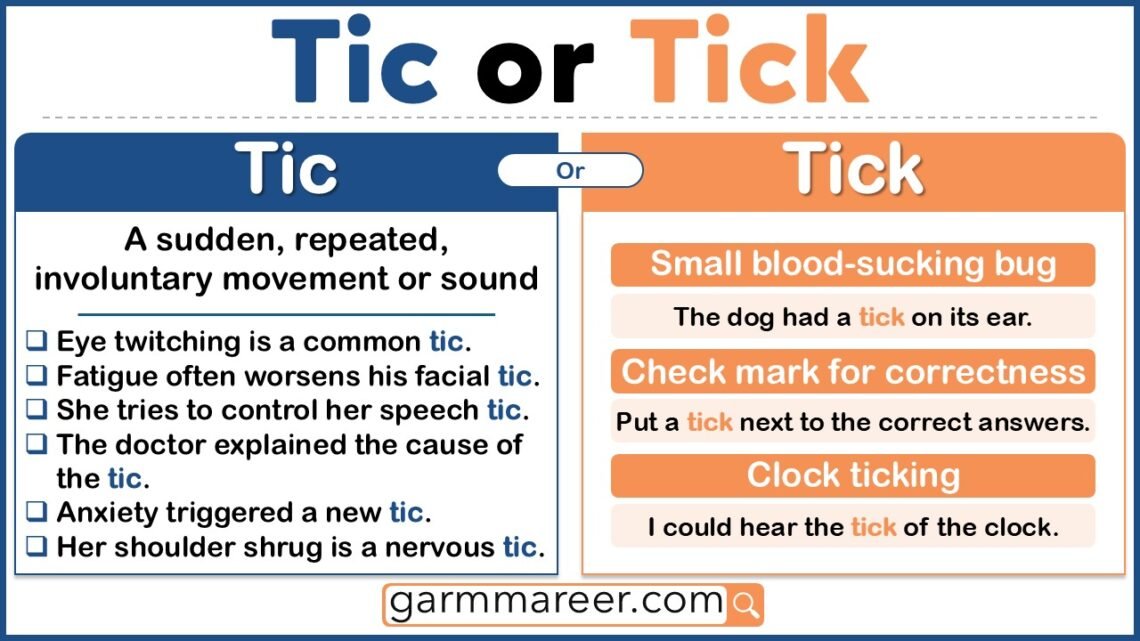
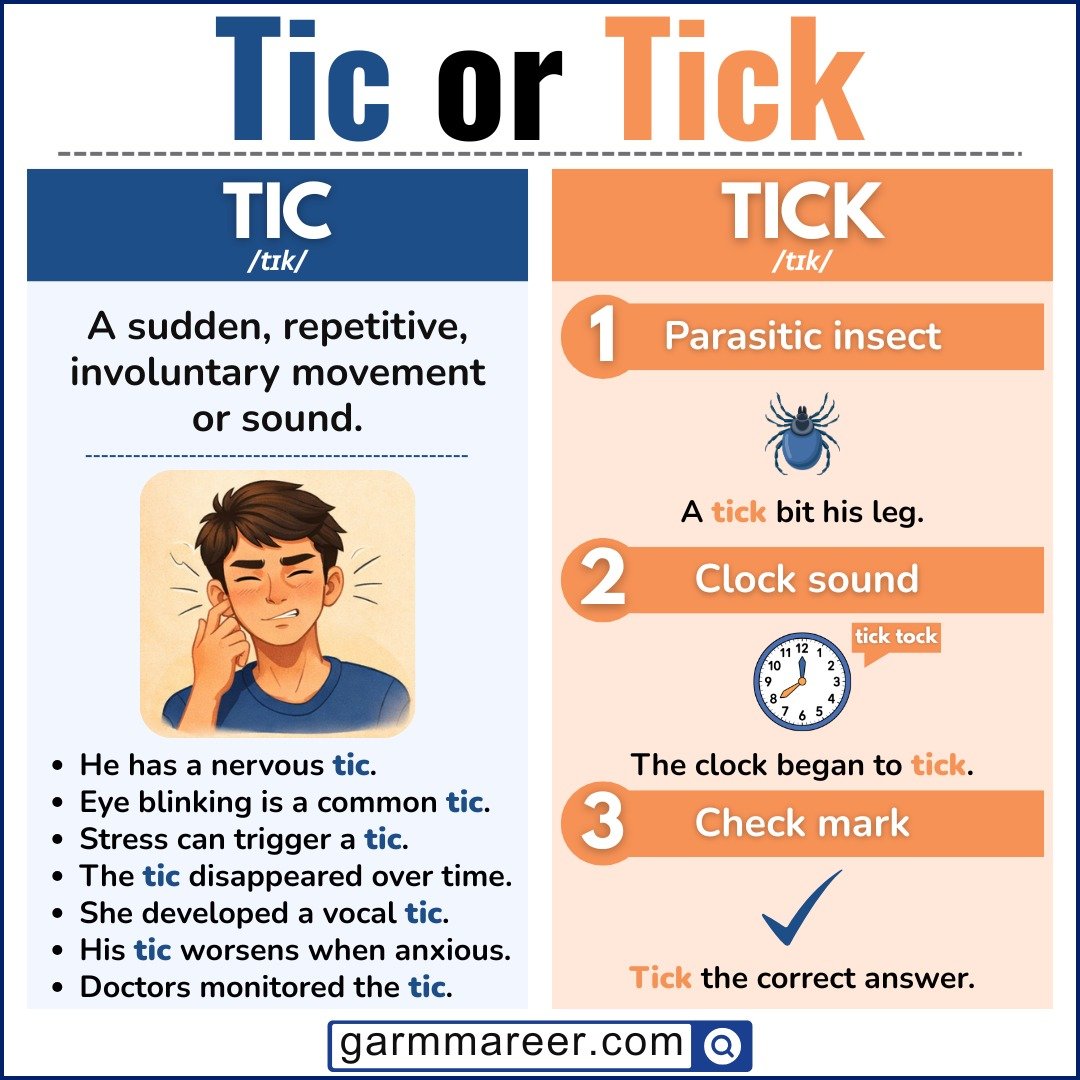
A tic is a sudden, repeated movement or sound that a person makes without meaning to. It usually happens quickly and automatically.
Examples:
- He has a nervous tic in his eye that twitches when he’s stressed.
- The child’s tic made him blink repeatedly during the class.
- Sometimes, people develop a tic when they feel anxious or nervous.
Tick Meaning
A tick can mean two main things: a small mark (✓) used to show something is correct, or the sound a clock makes.
Examples:
- Don’t forget to put a tick next to the correct answer.
- I heard the tick of the clock in the quiet room.
- She gave the box a tick to show it was completed.
How to Use the Word Tic?
We use the word tic to talk about a small, sudden, repeated movement or sound that someone does without meaning to. It usually happens when a person is nervous, stressed, or has a medical condition.
Examples:
- His eye has a small tic that twitches when he’s nervous.
- She developed a tic after staying up late for several days.
How to Use the Word Tick?
The word tick can be used in a few different ways, depending on the situation. Most commonly, it refers to the small mark (✓) that shows something is correct, or the sound a clock makes.
Examples:
- Use a tick to mark the tasks you have finished.
- I could hear the tick of the old wall clock.
Tic vs. Tick: What’s the Difference?
| Word | Meaning | Example Sentences |
|---|---|---|
| Tic | A sudden, repeated movement or sound that a person makes without meaning to. | • He has a nervous tic in his eye. • The child’s tic made him blink repeatedly. • Stress can sometimes cause a tic. |
| Tick | 1. A small mark (✓) to show something is correct. 2. The sound a clock makes. | • Don’t forget to put a tick next to the correct answer. • I could hear the tick of the clock. • She gave a tick to show the task was done. |
Examples of Tic in Sentences
- He has a nervous tic in his eyebrow that twitches often.
- The doctor noticed a small facial tic when she smiled.
- Stress and anxiety can sometimes trigger a tic in children.
- Her tic caused her to blink repeatedly during the meeting.
- Despite trying to hide it, his nervous tic kept showing up.
Examples of Tick in Sentences
- Put a tick next to the answers you think are correct.
- I could hear the tick of the clock in the quiet room.
- She gave a tick to show the box was completed.
- Make sure to tick all the items on your checklist.
- The old grandfather clock’s tick was soothing to hear.
FAQs about Tic or Tick
• A tic is a sudden, repeated movement or sound a person makes without meaning to.
• A tick can be a small mark (✓) to show something is correct, or the sound a clock makes.
Of course!
• He has a nervous tic in his eye that twitches.
• The child’s tic made him blink repeatedly.
• Put a tick next to the correct answer on your sheet.
• I could hear the tick of the clock in the quiet room.
It’s easy:
• Use tic when you talk about an involuntary movement or sound someone makes.
• Use tick when you mean a mark, a clock sound, or in phrases like “tick off” for completing tasks.
You May Also Like