Analyse and analyze are two spellings of one verb, and the difference is regional: analyse is British English, whereas analyze is American English. Both are pronounced the same way.
The noun analysis is spelled the same in every country, and so are analyst and analytical. The verb paralyse and paralyze follows the same pattern, as do other verbs that end in -yse and -yze.
By the end, you will learn which spelling your readers expect, master the verbs that end in -yse and -yze, and memorize a trick for the two endings, so you will keep one spelling from the first line to the last in an essay or a report.
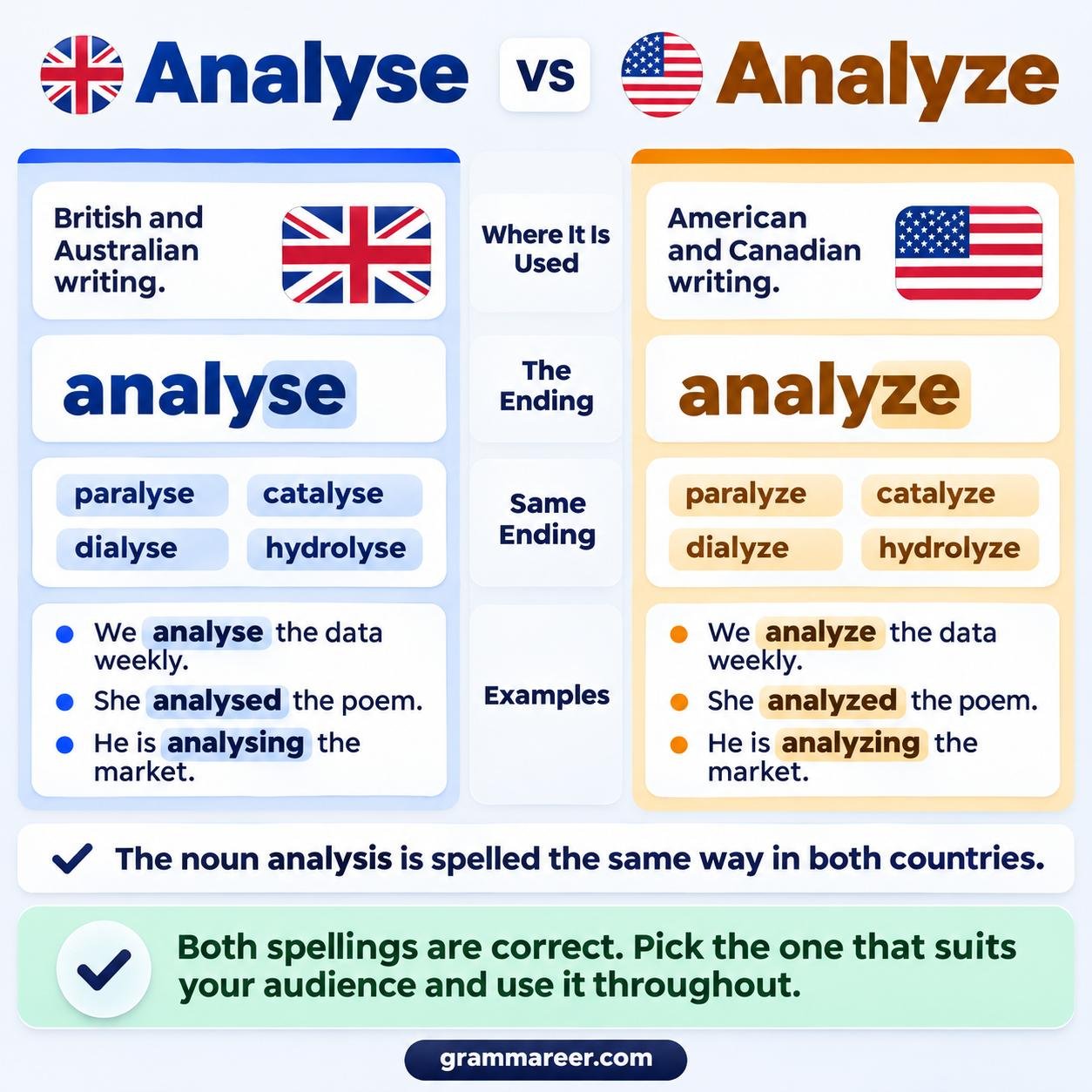
Table of Contents
Analyse Or Analyze In American English
Analyze is the American spelling, as in “scientists analyze samples” and “she analyzed the results”. The related words are spelled the same way: analyzing and analyzer.
Analyse Or Analyze In British English
Analyse is the British spelling, as in “scientists analyse samples” and “she analysed the results”. The related words are spelled the same way: analysing and analyser.
Some British publishers use -ize in other verbs, but even they use -yse in this word.
Which Spelling To Use
For an American or Canadian audience the spelling is analyze, and for a British or Australian one it is analyse.
| If the audience is in | Write |
|---|---|
| the United States | analyze |
| the United Kingdom | analyse |
| Australia | analyse |
| Canada | analyze |
| a mixed audience | the one in the house style |
Verbs Ending In Yse And Yze
Only a short list of verbs ends in -yse in British English and -yze in American English.
| British | American |
|---|---|
| analyse | analyze |
| paralyse | paralyze |
| catalyse | catalyze |
| dialyse | dialyze |
| hydrolyse | hydrolyze |
The nouns analysis, paralysis and catalyst, on the other hand, are the same in both countries.
Memory Trick For Analyse And Analyze
The British spelling has the s of analysis: analyse.
The American spelling has a z, like the American spellings realize and organize.
If the audience is not clearly British, choose the American spelling and use it throughout.
Examples Of Analyse And Analyze
| Analyze (US) | Analyse (UK) |
|---|---|
| We analyze the data weekly. | We analyse the data weekly. |
| She analyzed the poem. | She analysed the poem. |
| He is analyzing the market. | He is analysing the market. |
| The lab will analyze the blood. | The lab will analyse the blood. |
FAQs
Both are correct, since the two spellings differ by region. Analyze is American and analyse is British, as in analyze the data and analyse the data.
Yes, analyze is not used in standard British spelling for this word, where analyse is the form. Even British publishers that use -ize in other verbs write -yse here.
The past tense is analyzed in American English and analysed in British English, as in "she analyzed the results" and "she analysed the results".
No, analysis is not spelled differently, since it is spelled the same way in both countries. Paralysis and catalyst are likewise the same everywhere.
No, the two spellings should not be mixed on one page. One is chosen to suit the audience and used throughout, so a page for an American audience uses analyze every time.
Analyzing is the American spelling, whereas analysing is the British spelling, in line with analyze and analyse.
Related: