People often confuse engrained vs ingrained because they look and sound almost the same. Many learners wonder if both spellings are correct or if one counts as a mistake. In everyday English, we use these words to describe habits, beliefs, or feelings that stay deeply fixed and hard to change. In this article, we will explain the meaning of each word, show the key differences, and give simple examples to help you use the correct form with confidence.
Table of Contents
Engrained vs Ingrained: Meaning
Engrained and ingrained often confuse people because they look almost the same. At first glance, both spellings seem correct, but people use only one of them in everyday English. Knowing which word sounds natural to native speakers helps you write more clearly and confidently.
Engrained Meaning
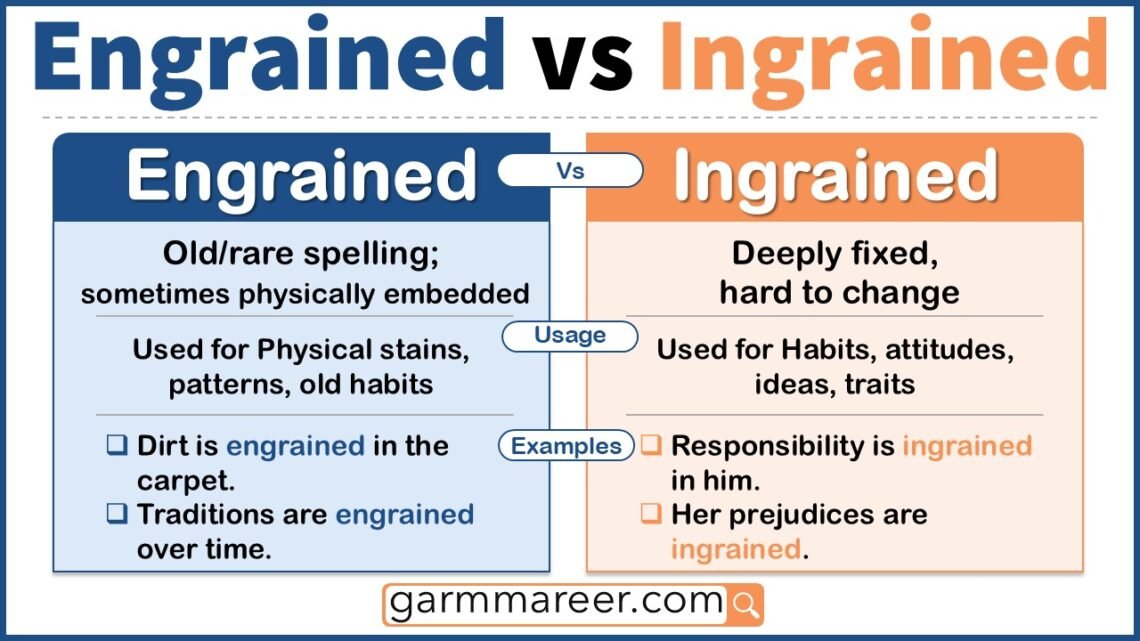
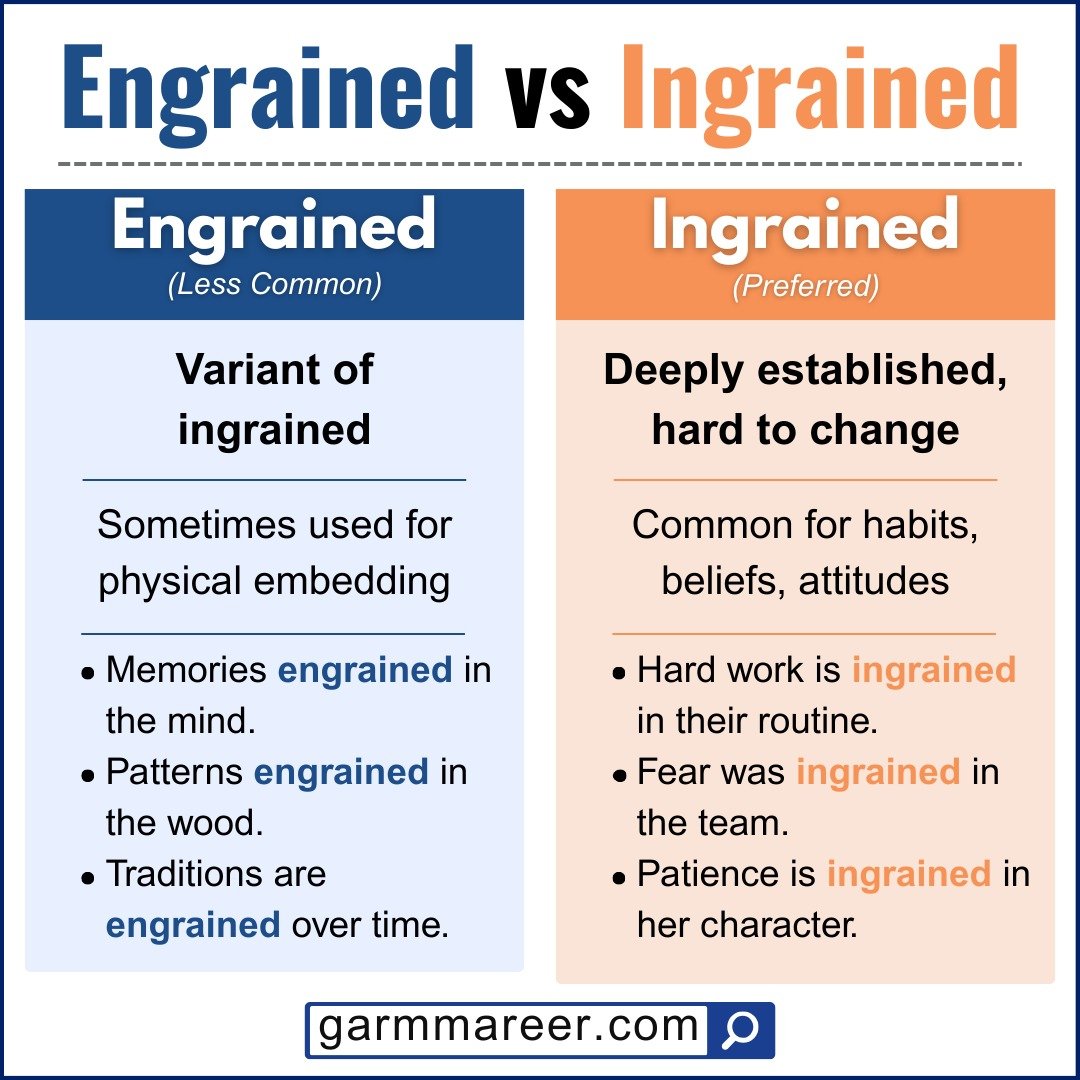
Engrained is a very rare and old spelling. Today, most people don’t use it when talking about habits or ideas that are deeply fixed because it just doesn’t sound right. You may still see engrained in old books, but it is not common now. Many writers avoid using engrained because it sounds outdated.
Ingrained Meaning
Ingrained is the correct and natural word to use. It describes habits, beliefs, or feelings that people hold deeply and find hard to change.
Examples:
- He wakes up early because it has become ingrained in his daily routine.
- She shows kindness in everything she does because it is ingrained in her personality.
When to Use Engrained vs Ingrained?
In modern English, you should almost always use ingrained. People use it as the correct and natural form to describe habits, beliefs, or qualities that stay deeply fixed and hard to change. Writers rarely use engrained today because it sounds outdated, so it is best to avoid it in everyday writing.
Examples:
- ✅ Correct: His love for reading is ingrained from childhood.
- ❌ Incorrect: His love for reading is engrained from childhood.
- ✅ Correct: Good study habits can become ingrained over time.
- ❌ Incorrect: Good study habits can become engrained over time.
Always use ingrained in modern English for clear and natural writing.
Engrained vs Ingrained – What’s the Difference?
The main difference between engrained and ingrained is that people use ingrained as the correct and common form in modern English, while engrained represents an old or uncommon spelling that writers rarely use today. Both words describe something deeply fixed or established, such as habits, beliefs, or qualities. To make your writing sound natural and correct, always use ingrained.
Examples:
- ✅ Correct: Her love for helping others is ingrained in her character.
- ❌ Incorrect: Her love for helping others is engrained in her character.
Examples of Engrained vs Ingrained
- ✅ Correct: Honesty stays ingrained in her personality.
- ❌ Incorrect: Honesty stays engrained in her personality.
- ✅ Correct: He loves reading because it is ingrained from childhood.
- ❌ Incorrect: He loves reading because it is engrained from childhood.
- ✅ Correct: Good study habits can become ingrained over time.
- ❌ Incorrect: Good study habits can become engrained over time.
FAQs About Engrained vs Ingrained
Ingrained is the correct and commonly used word. People use it to describe habits, beliefs, or qualities that stay deeply fixed and are hard to change. Engrained is an old or uncommon spelling, and writers rarely use it in modern English.
The difference is pretty simple. People use ingrained in everyday English because it sounds natural and correct. Writers used engrained in older texts, but people rarely use it today, so it can make your writing feel outdated or unusual.
Sure!
• ✅ Correct: They deeply ingrain respect for elders in their culture.
• ❌ Incorrect: They deeply engrave respect for elders in their culture.
• ✅ Correct: His childhood experiences ingrained a love for reading in him.
• ❌ Incorrect: His childhood experiences engrained a love for reading in him.
You May Also Like