Confused about the difference between inpatient and impatient? These two words sound similar but mean very different things. Knowing the difference can help you use them correctly in everyday situations. In this article, we’ll explain their meanings, show examples, and make it easy to remember which is which.
Table of Contents
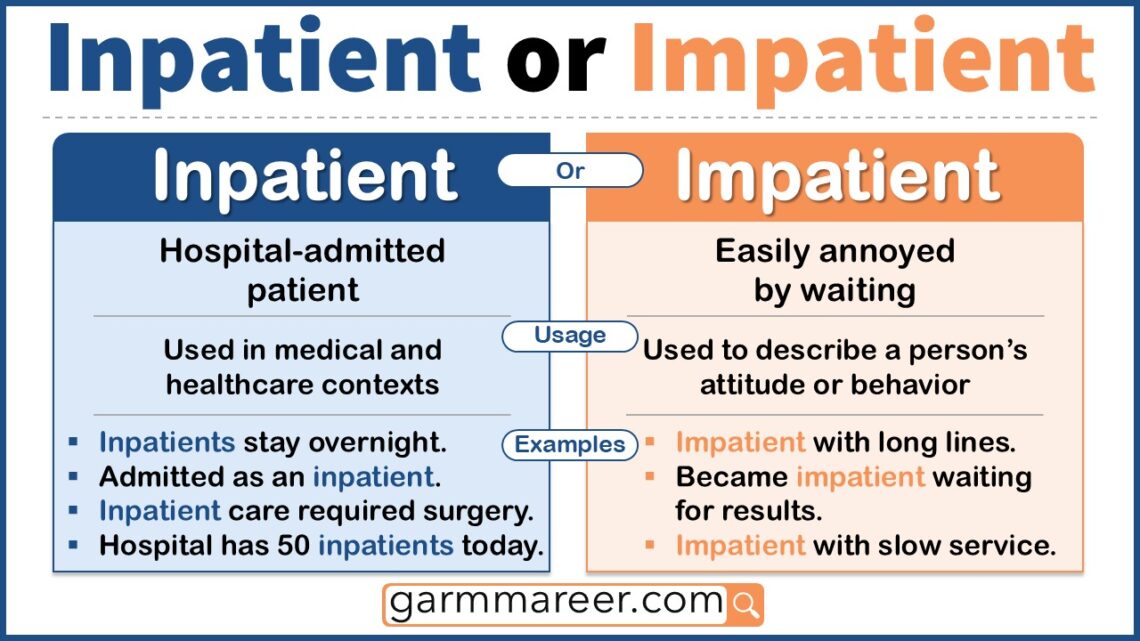
Inpatient or Impatient – Meaning
Sometimes words in English can sound very similar but mean completely different things. These are two such words. Let’s break them down so you can use them correctly.
Inpatient Meaning
The word inpatient usually refers to a person who stays in a hospital for treatment. It’s used in a medical context.
Examples:
- She was an inpatient for three days.
- The hospital has many inpatients.
Impatient Meaning
The word impatient describes someone who gets annoyed or restless when they have to wait or deal with delays. It’s about a feeling or attitude.
Examples:
- He was impatient in the long line.
- She felt impatient waiting for the news.
When to Use Inpatient?
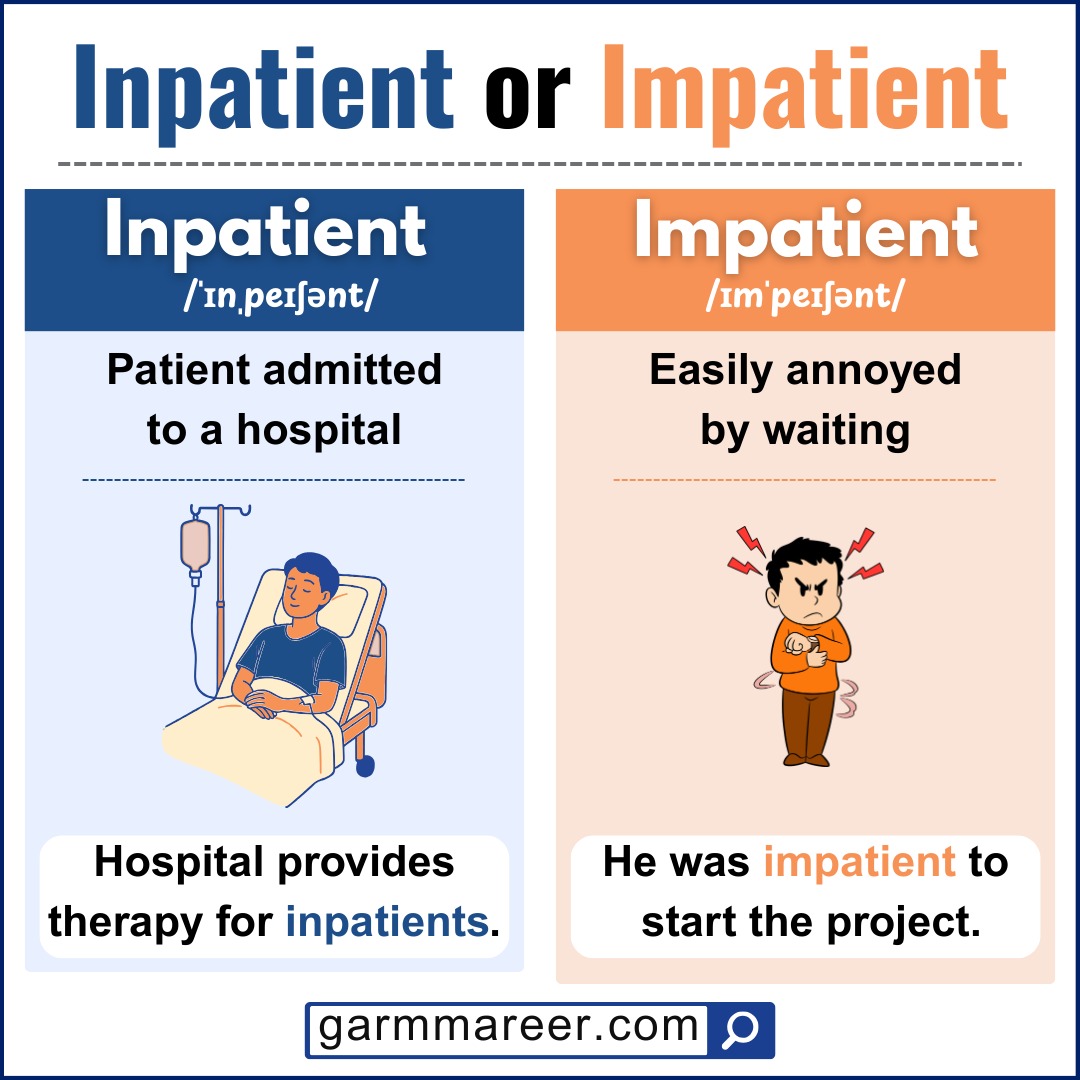
You use inpatient when talking about someone who stays in a hospital for treatment. It’s a medical term, so it’s not used for everyday waiting. If a person spends one or more nights in a hospital to get care, they are an inpatient.
Examples:
- She was an inpatient after her surgery.
- The hospital treats both inpatients and outpatients.
When to Use Impatient?
You use impatient when someone is feeling restless, annoyed, or eager because they have to wait for something. It’s all about impatience—wanting things to happen faster or being frustrated by delays. For example, if someone is waiting in a long line or waiting for a friend who is late, you can say they are impatient. It’s also used when someone is eager to do something and can’t wait any longer.
Examples:
- He was impatient waiting for the bus.
- She grew impatient while waiting for her turn.
What’s the Difference Between Inpatient and Impatient?
The difference is mainly about meaning and context.
- Inpatient is a medical term. It describes someone who stays in a hospital for treatment, usually overnight or longer. It’s about the situation, not a feeling.
Example:- She was an inpatient at the hospital.
- Impatient is about feelings. It describes someone who gets restless or annoyed when waiting.
Example:- He was impatient waiting for the results.
So, inpatient is a noun about a hospital stay, and impatient is an adjective about being unable to wait.
Examples of Inpatient or Impatient
- She was an inpatient at the hospital for surgery.
- The hospital has many inpatients recovering from treatment.
- He was impatient waiting for the bus.
- She grew impatient while waiting for the results.
- Don’t be impatient; good things take time.
- He became an inpatient after breaking his leg.
FAQs
• Inpatient refers to someone who stays in a hospital for treatment.
• Impatient describes someone who feels restless or annoyed when waiting.
The difference is all about context:
• Inpatient is a noun about a hospital stay.
• Impatient is an adjective about a feeling of restlessness or frustration while waiting.
• Inpatient: She was an inpatient at the hospital for surgery.
• Impatient: He was impatient waiting for the bus to arrive.
You May Also Like