Understanding the difference between inter vs intra can be confusing because both prefixes look and sound similar. But once you know what each one means, it becomes much easier to use them correctly. In this article, you will learn the meaning of both words, how they differ, and everyday examples that make the difference clear and easy to remember.
Table of Contents
Inter vs Intra: Meaning
Before we look at the meanings, it is important to understand that inter and intra are prefixes used to show relationships. They help us describe whether something happens between groups or within a single group. Knowing this difference makes communication clearer and more accurate.
Inter Meaning
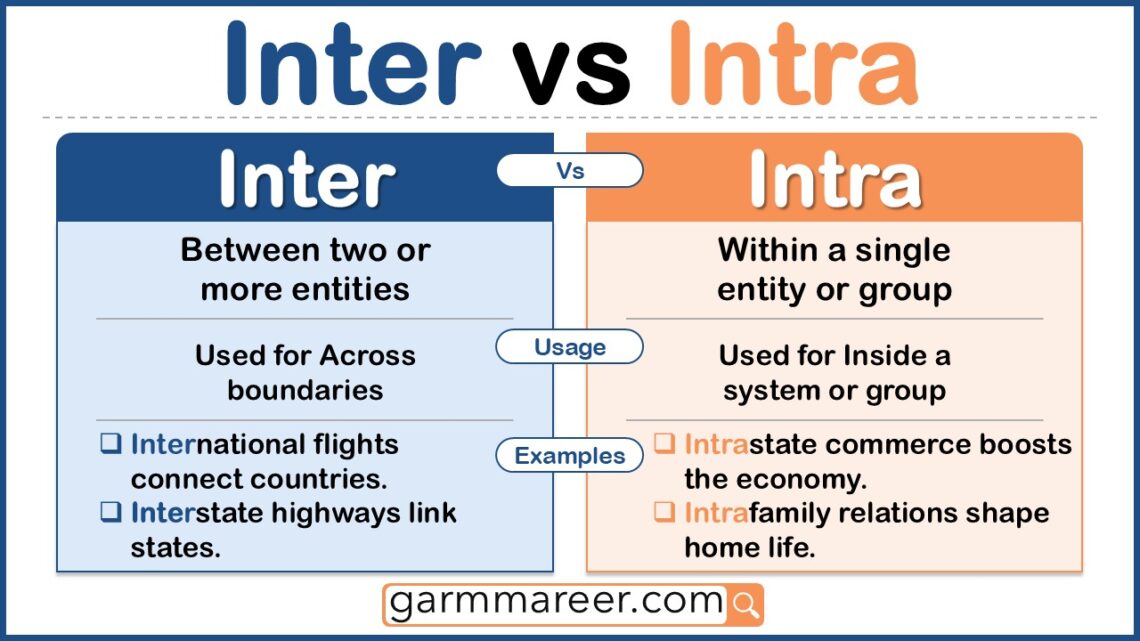
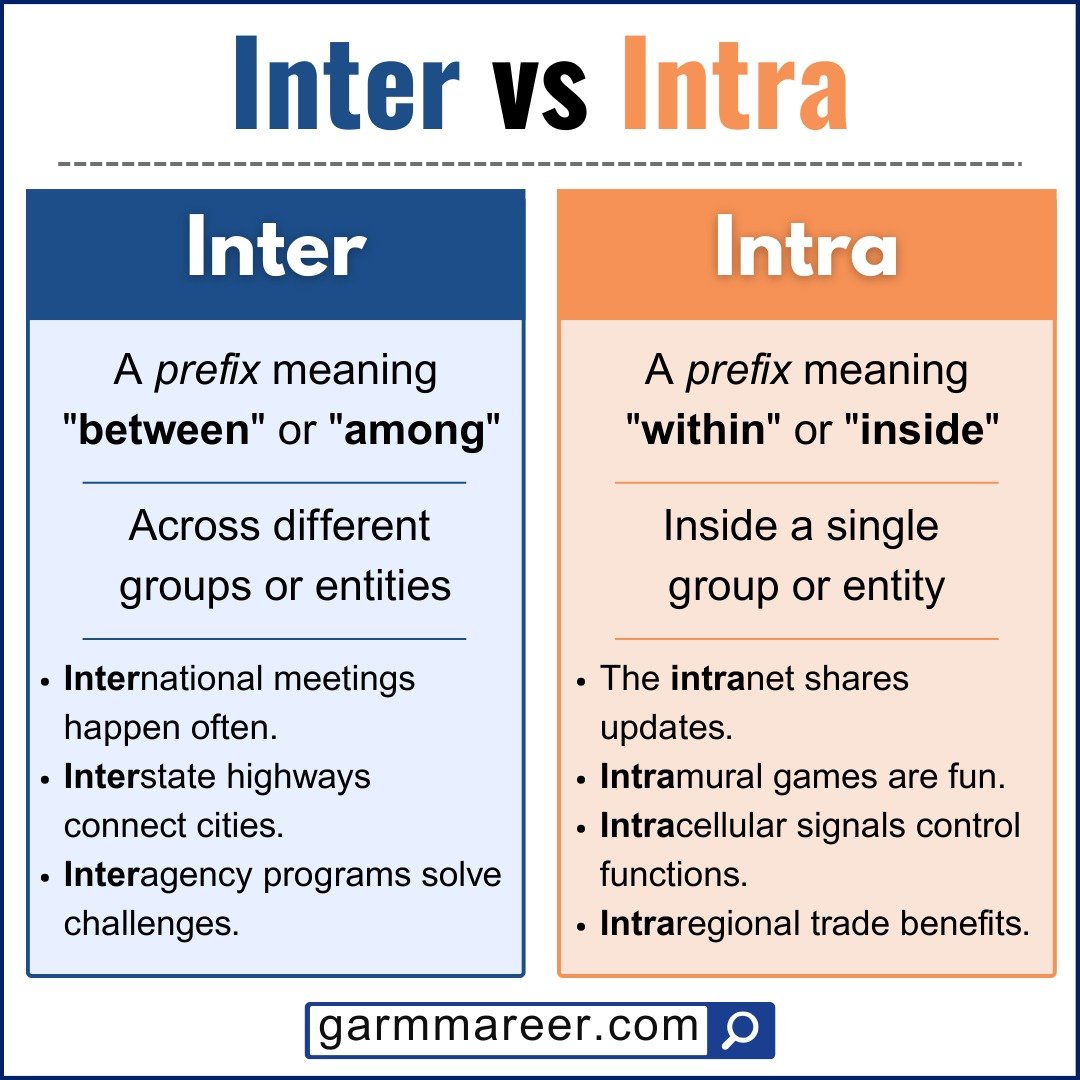
Inter means between or among. It is used when something involves two or more groups, places, or people.
Examples:
- International trade grows every year.
- The schools held an interschool competition.
- They announced an intercity bus service.
Intra Meaning
Intra means within. It is used when something happens inside one group, place, or system.
Examples:
- He received intravenous medicine.
- The company uses an intranet for employees.
- We had an intraclass quiz today.
When to Use Inter vs. Intra?
Now that you know what inter and intra mean, the next step is understanding when to use them correctly. These prefixes seem similar, but the situations in which we use them are very different.
Inter is used when something happens between two or more groups. It shows connection, exchange, or interaction across different people, places, or organizations. You will often see it in words related to communication, travel, competition, or cooperation.
Examples:
- The two cities launched an intercity bus service.
- Our school won the interschool debate competition.
- Scientists are working on an international climate project.
Intra, on the other hand, is used when something takes place within a single group or system. It focuses on the inside, without involving any outside party.
Examples:
- The company created an intra-office messaging system.
- Nurses gave the patient intravenous fluids.
- We had an intraclub sports day just for our members.
Is a hyphen needed for inter and intra?
Most of the time, you do not need a hyphen when using the prefixes inter and intra. These prefixes are usually written as one continuous word.
Examples:
- interstate, not inter-state
- intranet, not intra-net
- intracranial, not intra-cranial
Writers only use hyphens in a few special cases. Some style guides, for example, allow hyphens to avoid awkward spelling or confusion. This typically happens when the word begins with the same vowel the prefix ends with, such as intra-arterial, where the double a might cause a stumble in reading.
You may also see hyphens when the word starts with a capital letter, such as Inter-American, but this depends on the guide you follow.
Difference Between Inter vs. Intra
| Prefix | Meaning | Examples | Usage |
|---|---|---|---|
| Inter | Between or among | international, interschool, interstate | Used when something involves two or more groups, places, or people |
| Intra | Within or inside | intranet, intramural, intravenous | Used when something happens inside one group, place, or system |
Examples of Inter vs Intra
- The company uses an intranet for internal communication.
- Students participated in an intramural basketball tournament.
- International flights connect different countries.
- The schools held an interschool sports competition.
- They traveled via the intercity train.
- The doctor gave an intravenous injection.
Frequently Asked Questions About Inter vs Intra
Inter means between or among. It is used when something involves two or more groups, places, or people. For example, international refers to something happening between countries.
Intra means within or inside. It is used when something happens inside a single group, place, or system. For example, an intranet is a network used within one organization.
Most of the time, you don’t need a hyphen. Write words like interstate, intranet, and intravenous as one word. Use a hyphen only in special cases, such as to avoid double vowels (e.g., intra-arterial) or when the root word starts with a capital letter (e.g., Inter-American).
You May Also Like