“Let’s” or “lets” are two words that often confuse people. They look similar and sound the same, but using the right one can make a big difference. In this article, we’ll look at their difference and share simple examples to make it easy to remember.
Table of Contents
Let’s or Lets—What’s the Difference?
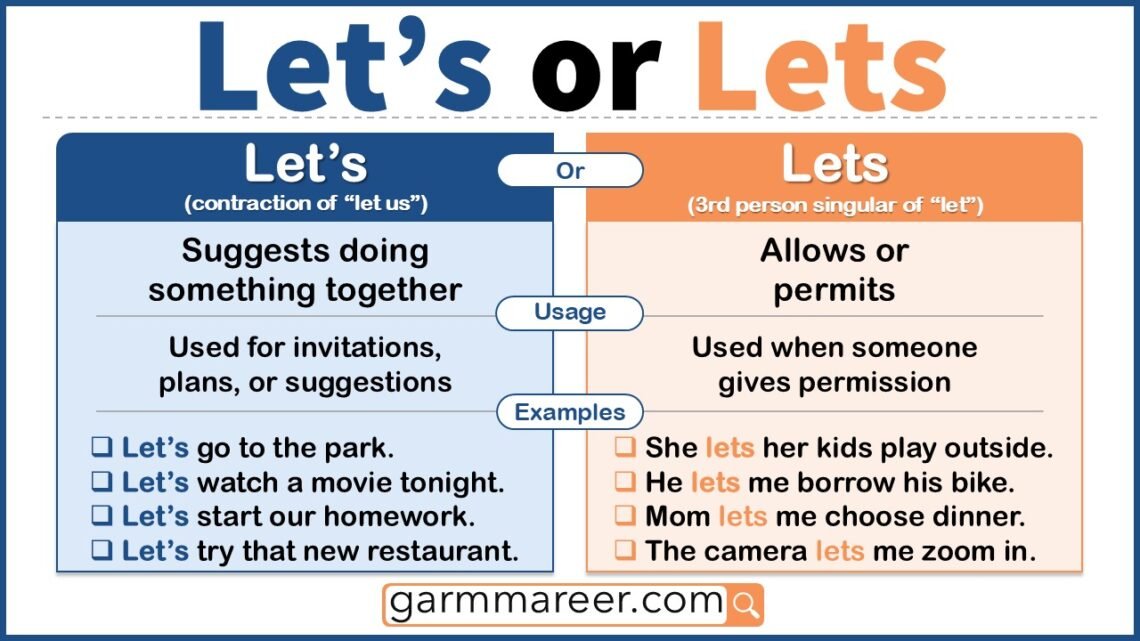
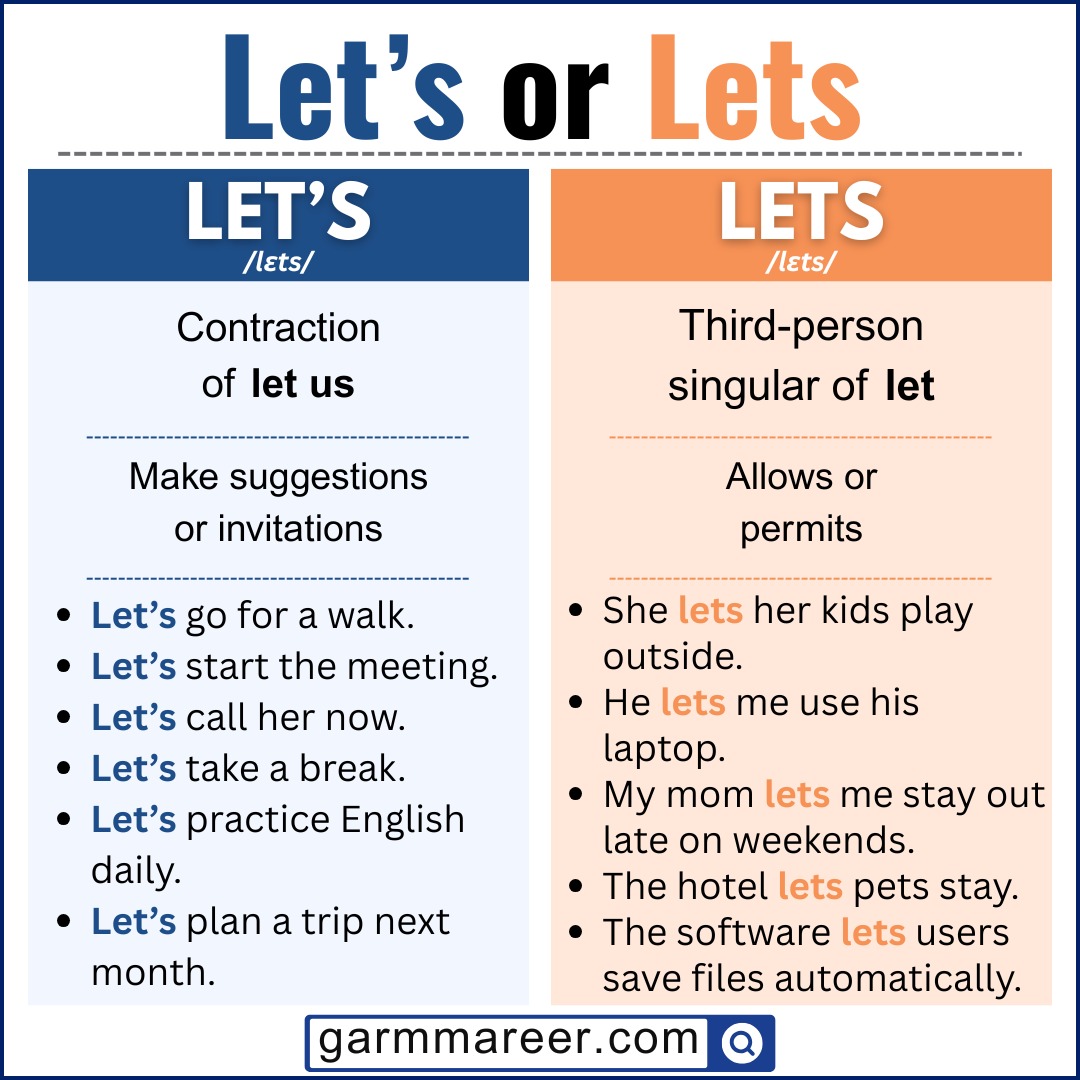
Many people get confused between “let’s” and “lets” because they sound the same, but they are used differently. “Let’s” is a contraction of “let us,” used when suggesting or inviting someone to do something. On the other hand, “lets” is the simple present form of the verb “let,” meaning to allow or permit. Understanding their difference is simple once you see how each is used in real sentences.
Let’s Meaning
“Let’s” is a contraction of “let us.” It is often used to make suggestions, invitations, or proposals.
Examples:
- Let’s go to the park this afternoon.
- Let’s start the meeting now.
- I think let’s try a new recipe tonight.
- Let’s not waste time and get started.
Lets Meaning
“Lets” is the simple present form of the verb “let,” which means to allow or permit someone to do something.
Examples:
- She lets her children play outside after school.
- The teacher lets students ask questions during class.
- This app lets you track your daily expenses.
When to use Let’s?
We use “let’s” when we want to suggest or invite someone to do something together. It’s short for “let us” and makes your sentence sound friendly and casual.
Examples:
- Let’s go for a walk.
- Let’s watch a movie tonight.
- Let’s try this new recipe.
It’s basically for making suggestions, giving ideas, or inviting others to join you.
When to use Lets?
We use “lets” when someone allows or permits something to happen. It shows permission or gives someone the ability to do something.
Examples:
- The teacher lets students leave class a little early.
- This app lets us edit photos easily and quickly.
- He lets us borrow his books whenever we need them.
It’s all about giving permission or making it possible for someone to do something.
Common Mistakes With Let’s or Lets
A lot of people get confused between let’s and lets because they sound exactly the same. One common mistake is using lets when we actually mean let’s for a suggestion or invitation.
Examples:
- Wrong: Lets go to the park.
- Correct: Let’s go to the park.
Another mistake is using let’s when permission is meant.
- Wrong: She let’s her brother play outside.
- Correct: She lets her brother play outside.
because she is allowing it, not making a suggestion.
Finally, a simple way to remember is: if you can say “let us” in the sentence, it’s let’s; if it’s about allowing or giving permission, it’s lets. This little trick makes it easy to avoid mistakes.
Examples of Let’s or Lets
- The teacher lets us ask questions during class.
- My parents let me stay out a little later on weekends.
- This app lets us track our expenses easily.
- Let’s start working on the project together.
- Let’s try that new restaurant this weekend.
- Let’s not forget to call her tonight.
- He lets his dog play freely in the garden.
- Let’s go for a walk after lunch.
FAQs About Let’s or Lets
• Let’s is a contraction of “let us,” used to make suggestions or invite someone to do something.
• Lets is the present tense of the verb “let,” which means to allow or give permission.
Both words are correct, but it depends on the sentence. Use let’s for suggestions and invitations, and lets when someone allows or permits something.
The difference is simple:
• Let’s = used to suggest or invite (let us)
• Lets = used to allow or permit
You May Also Like