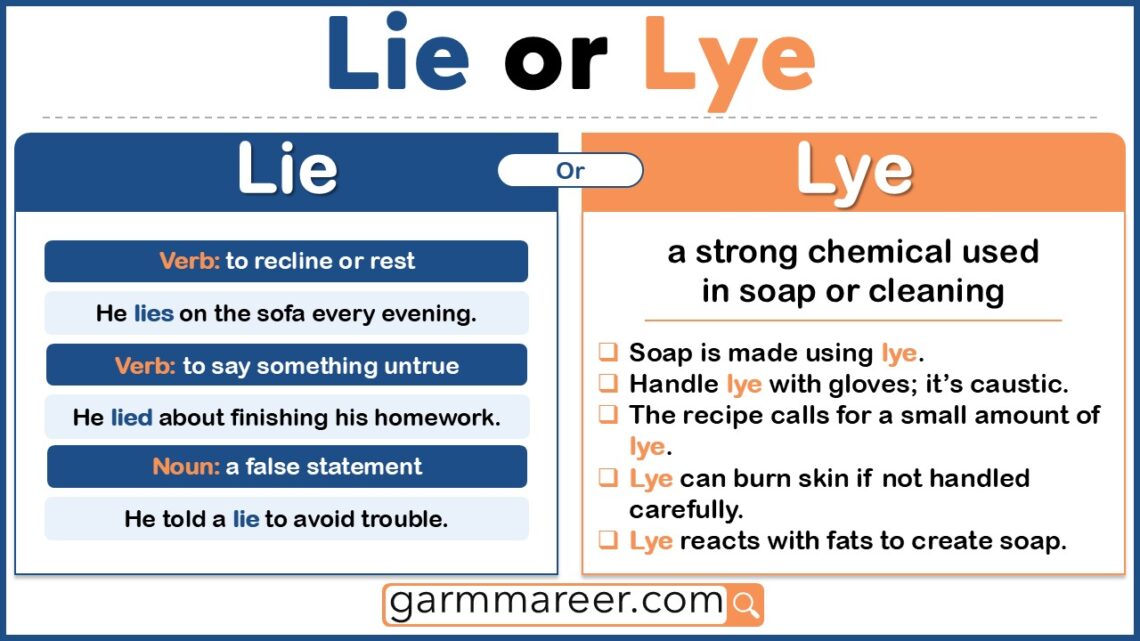
Have you ever wondered whether it’s lie or lye? These two words sound similar, but they have very different meanings and uses. Lie can mean not telling the truth or reclining, while lye is a strong chemical used in cleaning and soap making. In this article, we’ll break down the meaning of each word, show how they are different, and give easy examples so you won’t get confused again.
Table of Contents
Lie or Lye: What’s the difference?
It’s easy to get confused between lie and lye because they sound almost the same. But their meanings are very different, and using the wrong one can completely change your sentence. Let’s break it down so it’s easy to remember.
Lie Meaning
The word lie can be a verb or a noun.
- As a verb, it means not telling the truth or reclining/lying down.
- As a noun, it means a false statement.
Examples:
- He lied about finishing his homework.
- I like to lie down after a long day.
- That story was just a lie.
Lye Meaning
Lye is a strong chemical used in making soap or cleaning. It is very different from lie.
Examples:
- Be careful when handling lye, it can burn your skin.
- Soap is often made using water, oil, and lye.
When to use Lie?
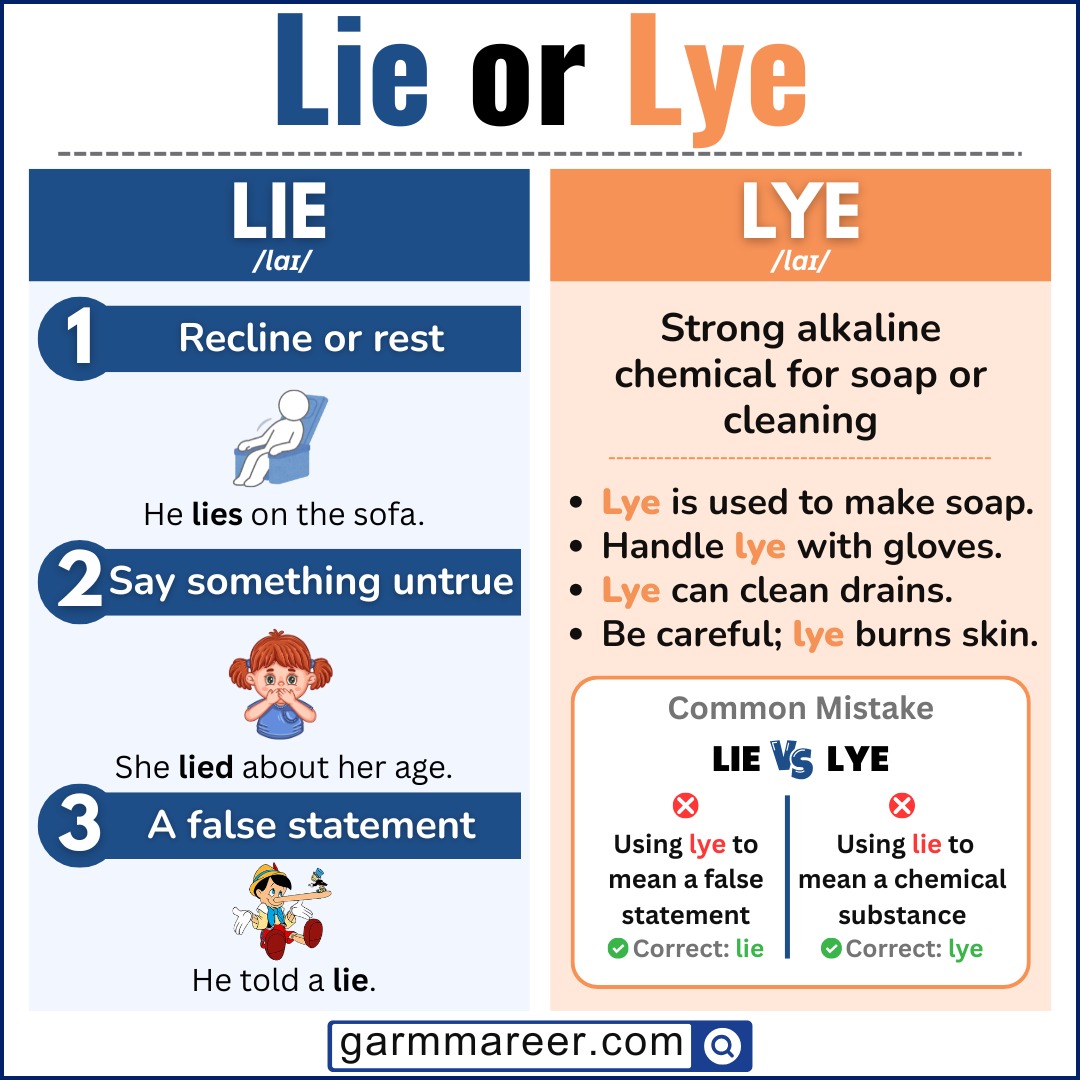
Use lie when you mean not telling the truth or lying down to rest.
- Not telling the truth:
- Example: He lied about finishing his homework.
- Lying down to rest:
- Example: I like to lie on the bed and read a book.
When to use Lye?
Use lye when you are talking about a strong chemical used in soap or cleaning.
Examples:
- Be careful with lye, it can hurt your skin.
- Soap makers mix water, oil, and lye to make soap.
Common Mistakes with Lie and Lye
Many people get confused because lie and lye sound the same, but their meanings are very different.
- Using lie instead of lye
- ❌ Wrong: Be careful, the lie can burn your skin.
- ✅ Correct: Be careful, the lye can burn your skin.
- Using lye instead of lie
- ❌ Wrong: He lye about finishing his homework.
- ✅ Correct: He lied about finishing his homework.
- Mixing up the resting meaning of lie
- ❌ Wrong: I want to lye on the sofa.
- ✅ Correct: I want to lie on the sofa.
Examples of Lie or Lye
- He lied about finishing his homework.
- I like to lie down on the sofa after school.
- That story was just a lie.
- Don’t lie to your friends.
- She lied because she was scared.
- Be careful when handling lye, it can burn your skin.
- The soap maker added lye to water and oil to make soap.
- Lye is used to clean some drains.
- Gloves are important when working with lye.
- The chemical lye should never be swallowed.
FAQs
• Lie can mean not telling the truth or lying down to rest.
• Lye is a strong chemical used in soap making or cleaning.
Sure!
• He lied about finishing his homework.
• I like to lie on the sofa and read.
• Be careful when handling lye, it can burn your skin.
• The soap maker used lye to make soap.
Both words are correct, but it depends on the meaning:
• Use lie when talking about not telling the truth or resting/lying down.
• Use lye when talking about the chemical for soap or cleaning.
You May Also Like