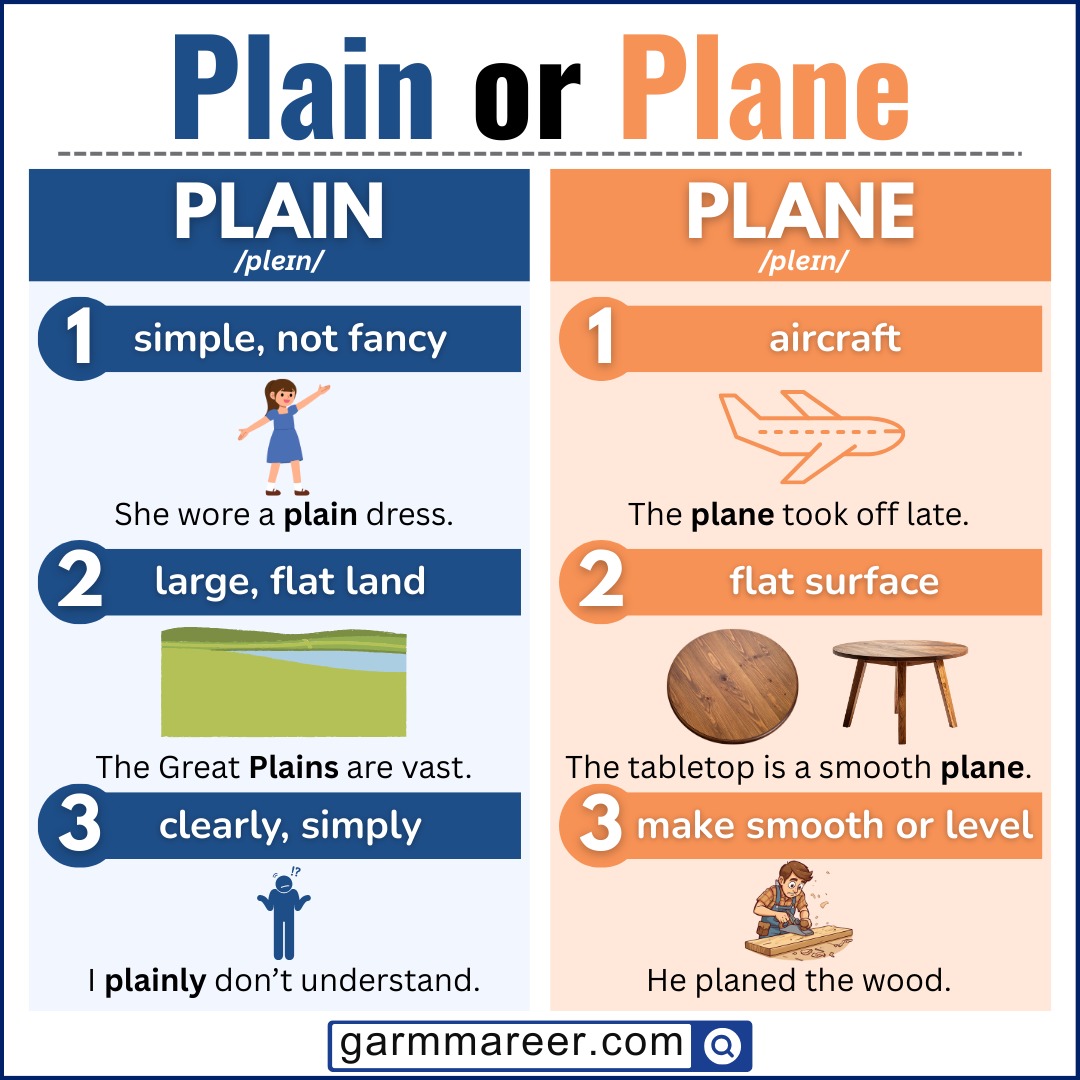
Plain and plane look and sound similar, so it is easy to mix them up. However, they do not mean the same thing. Plain is used for something simple or clear, while plane is often used for an aircraft or a flat surface. In this article, you will learn the difference between plain and plane with easy definitions and examples.
Table of Contents
Plain or Plane: Meaning
These are two English words that sound the same but have different meanings and uses. Because of this, many learners get confused while reading or writing. Understanding how each word is used will help you choose the correct one in every situation.
Plain Meaning
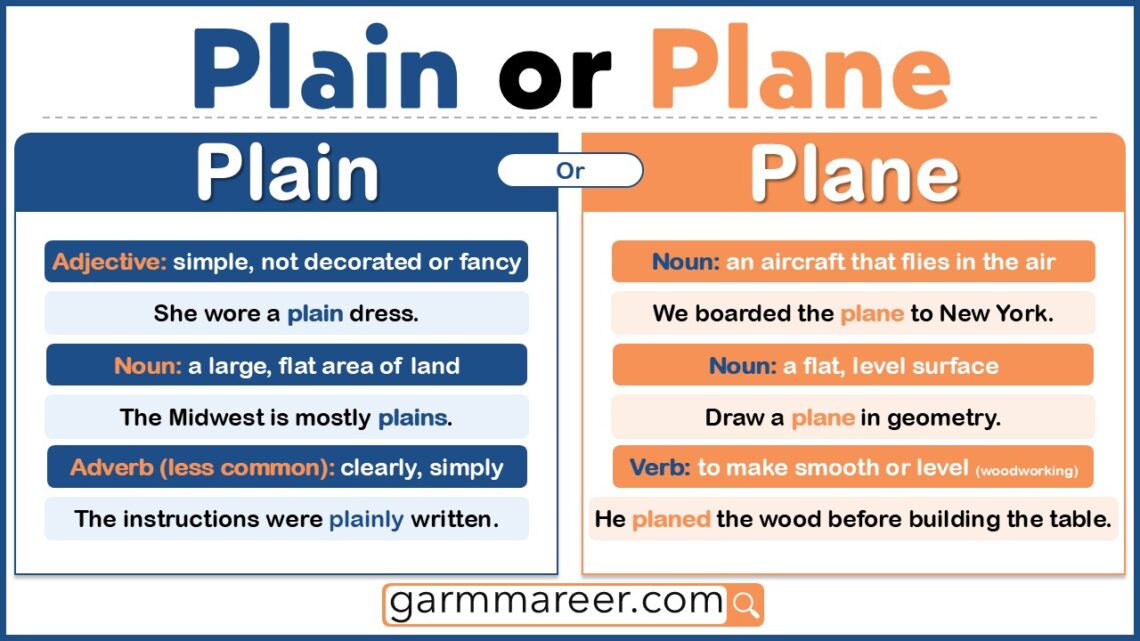
Plain means simple, clear, or not fancy. It can also describe something flat or easy to understand.
Examples:
- She wore a plain white dress.
- Please explain the rules in plain language.
- The food looked plain, but it tasted good.
Plane Meaning
Plane usually means an aircraft that flies in the sky. It can also refer to a completely flat surface.
Examples:
- We traveled to Dubai by plane.
- The plane took off early in the morning.
- In geometry, a plane is a flat surface.
How to Use the Word Plain in a Sentence?
The word plain is used when you want to talk about something simple, basic, or without extra details. It can also describe a large, flat area of land. Depending on the sentence, plain can work as an adjective or a noun.
Examples:
- He likes plain food without strong spices.
- The teacher gave a plain explanation that everyone understood.
- They walked across a wide plain during their journey.
How to Use the Word Plane in a Sentence?
The word plane is commonly used for an aircraft that flies in the sky. It can also describe a flat surface, especially in math or technical topics. Plane is used as a noun.
Examples:
- I felt excited when the plane started moving down the runway.
- The plane landed safely despite the bad weather.
- A plane in geometry has length and width but no thickness.
What’s the difference between Plain or Plane?
The words plain and plane sound the same, but they have different meanings and uses.
- Plain is used to describe something simple, clear, or not decorated. It can also refer to a large, flat area of land.
- On the other hand, plane usually refers to an airplane that flies in the sky or a flat, level surface in geometry or carpentry.
Using them correctly depends on the context, so remember: plain is about simplicity or land, and plane is about flying or flat surfaces.
Examples of Plain or Plane
- We watched the plane fly across the sky.
- In math class, we studied a plane in geometry.
- She wore a plain t-shirt and jeans to the party.
- The farmers worked hard on the wide, open plain.
- I like my toast plain, without butter or jam.
- He gave a plain explanation that everyone could understand.
- The room was painted in a plain white color.
- The carpenter used a plane to smooth the wooden surface.
- The pilot checked the plane before takeoff.
- The plane landed safely despite the storm.
FAQs
• Plain refers to something simple, clear, or undecorated. It can also mean a large, flat area of land.
• Plane usually refers to an airplane or a flat, level surface in geometry or carpentry.
Both words are correct, but their use depends on the context. Use plain when talking about simplicity or land, and plane when talking about an aircraft or a flat surface.
The difference is simple:
• Plain = simple, clear, or a flat land area
• Plane = an aircraft or a flat surface
You May Also Like