It is easy to get confused between hail and hale because they sound the same, but they do not mean the same thing at all. You might come across them while writing, reading, or even talking, and suddenly wonder which one is correct. In this article, we will learn their meanings and understand how to use each word naturally in everyday sentences.
Table of Contents
Hail or Hale – Meaning
It is common to mix up hail and hale because they sound the same, but their meanings are completely different. Before you use them in writing or conversation, it helps to understand what each word actually refers to.
Hail Meaning
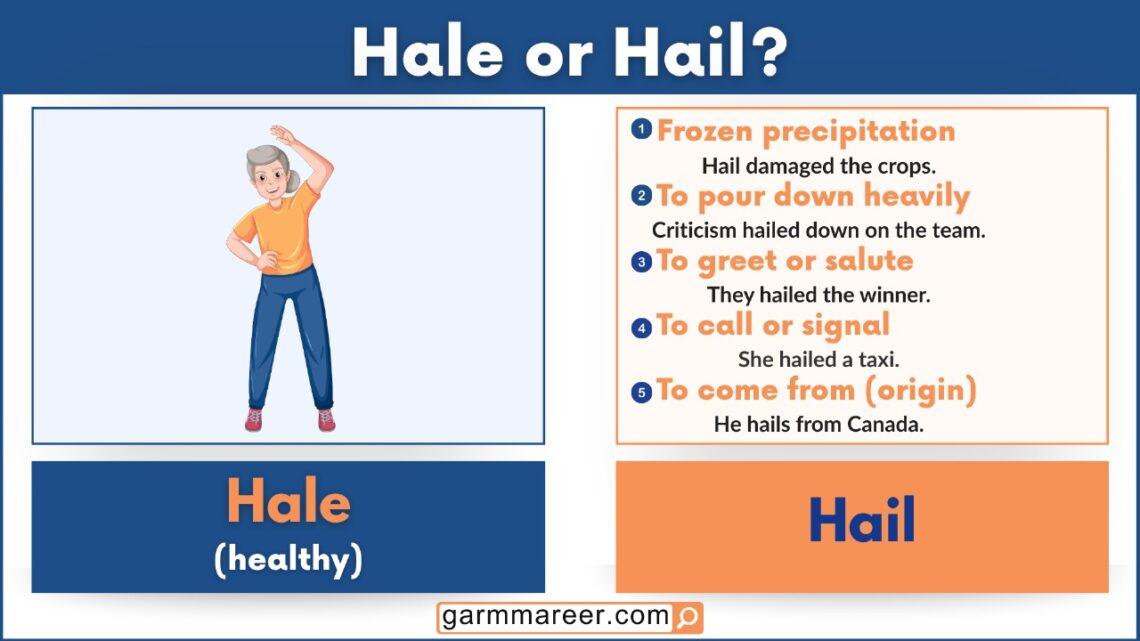
Hail is a noun and a verb.
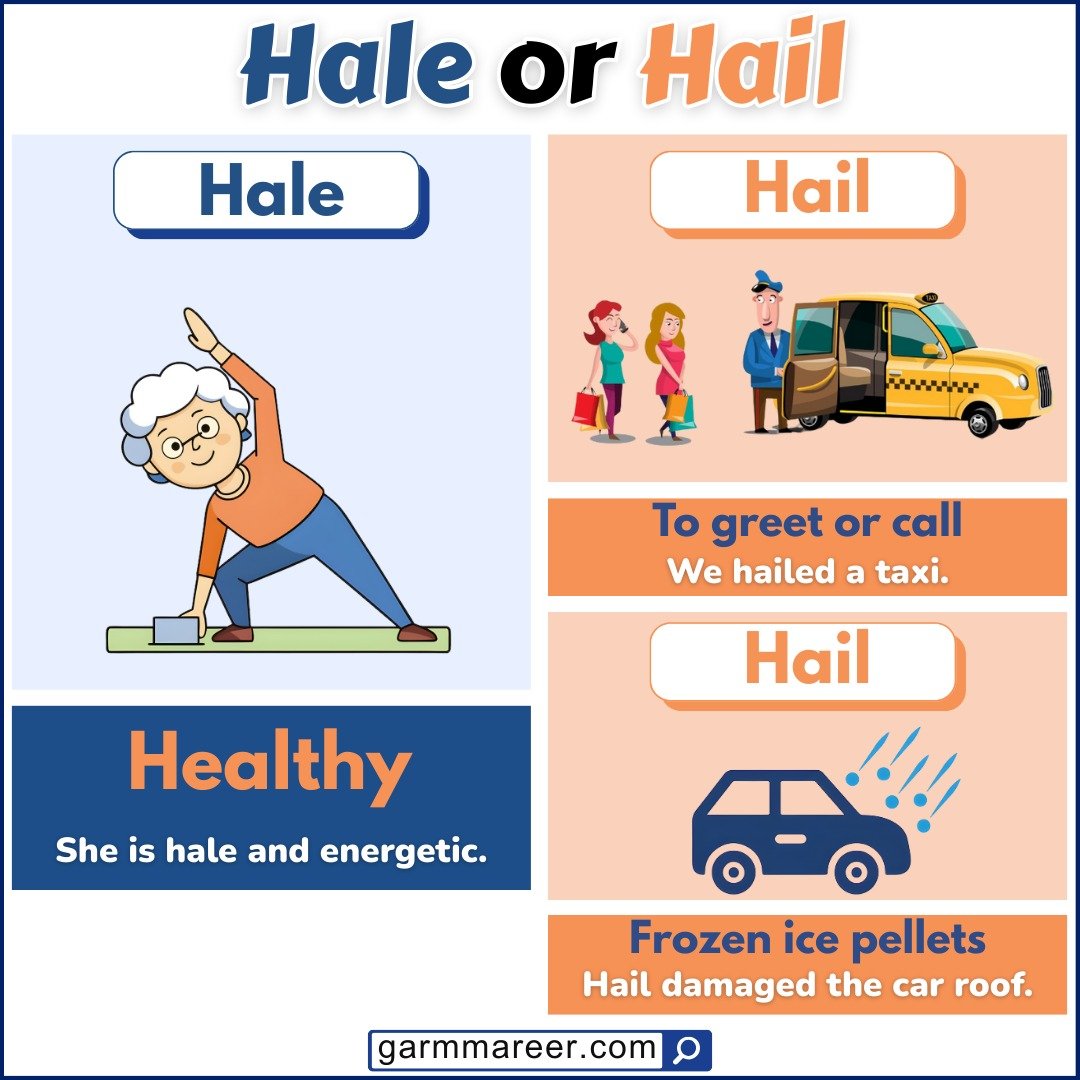
As a noun, Hail refers to small pieces of ice that fall from the sky during a storm. As a verb, it can also mean calling out to get someone’s attention or praising someone.
Examples:
- It started to hail during the afternoon storm.
- She tried to hail a taxi on the busy road.
- The athlete was hailed as a hero after the match.
Hale Meaning
Hale describes someone who is strong, healthy, or in good physical condition. It is mostly used for people, especially older adults, who are still active and fit.
Examples:
- Her grandfather is still hale and active at the age of 80.
- The hikers looked hale after completing the long trail.
- She remains hale despite her busy routine.
How to Use the Word Hail in a Sentence?
The word hail can be used in a few different ways. Hail can mean calling out to someone or small balls of ice that fall from the sky. You might hail a taxi on a busy street, or talk about hail during a storm. So, depending on the context, hail can either be about getting someone’s attention or about the weather.
Examples:
- She tried to hail a cab but none stopped.
- Hail started falling during the afternoon storm.
- The singer was hailed for her amazing performance.
How to Use the Word Hale in a Sentence?
Hale is an adjective used to describe someone who is healthy, strong, and full of energy. It’s often used for older people to show that they are still fit and active. You can use hale whenever you want to highlight someone’s good health or vitality.
Examples:
- Even at 75, she is hale and enjoys morning walks every day.
- The hale old man surprised everyone by climbing the hill without resting.
- After months of exercise, he felt hale and ready for any challenge.
Hail or Hale: What’s the Difference?
| Word | Meaning | Used as a noun and a verb | Example Sentence |
|---|---|---|---|
| Hail | Frozen ice pellets that fall during a storm; also means to call out or praise someone | Used as a noun and verb | • It began to hail during the storm. |
| Hail (verb) | To call out or stop someone/something | Action | • She tried to hail a taxi. |
| Hail (verb) | To praise or applaud someone | Action | • The player was hailed as the star of the match. |
| Hale | Strong, healthy, and physically fit | Used as an adjective (mostly for people) | • Her grandmother is still hale at 85. |
Examples of Hail and Hale in Sentences
- It began to hail during the heavy storm.
- She tried to hail a taxi on the busy street.
- Her grandfather is still hale and active at 90.
- The old captain looked hale despite years at sea.
- She met a hale elderly woman who walked faster than everyone.
- The hikers returned from the mountain hale and cheerful.
- Even at his age, he remains hale and full of energy.
- The singer was hailed as the best performer of the night.
- Tourists hailed from different countries to attend the festival.
You May Also Like