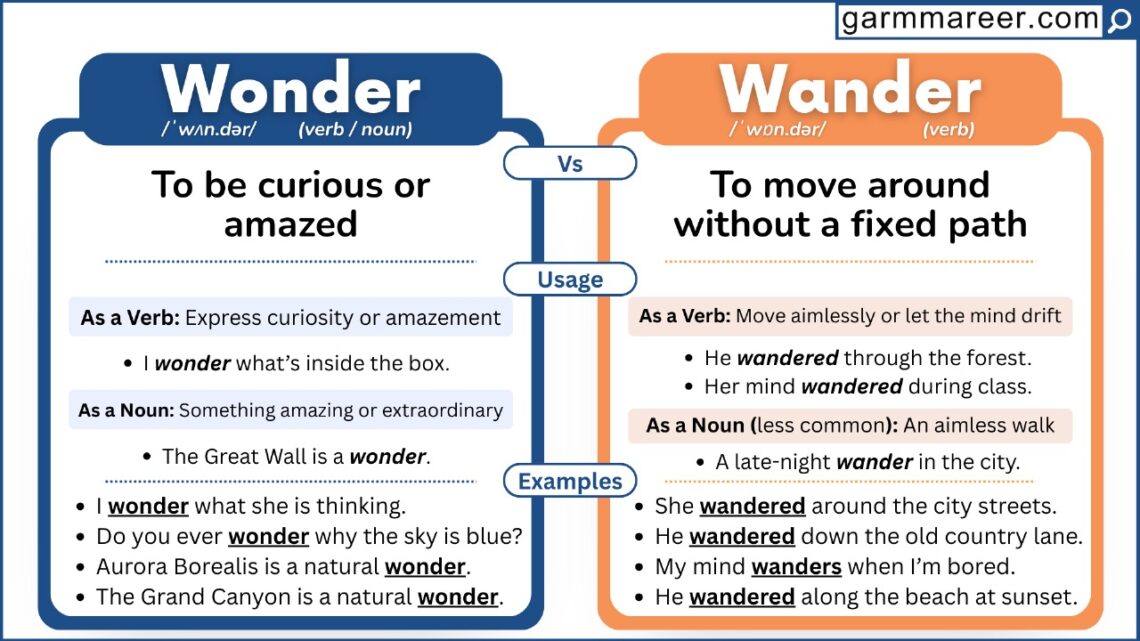
Wonder or wander might look alike, but they mean very different things. Wander is about moving around without a set direction, while wonder is all about feeling curious or amazed. In this article, we’ll explain the difference between the two, show you how to use them in everyday sentences, and give examples that make it easy to remember.
Table of Contents
Wonder or Wander – Meaning
Although wonder and wander look similar, they have very different meanings and uses. Let’s take a closer look at each word so you can use them correctly.
Wonder Meaning
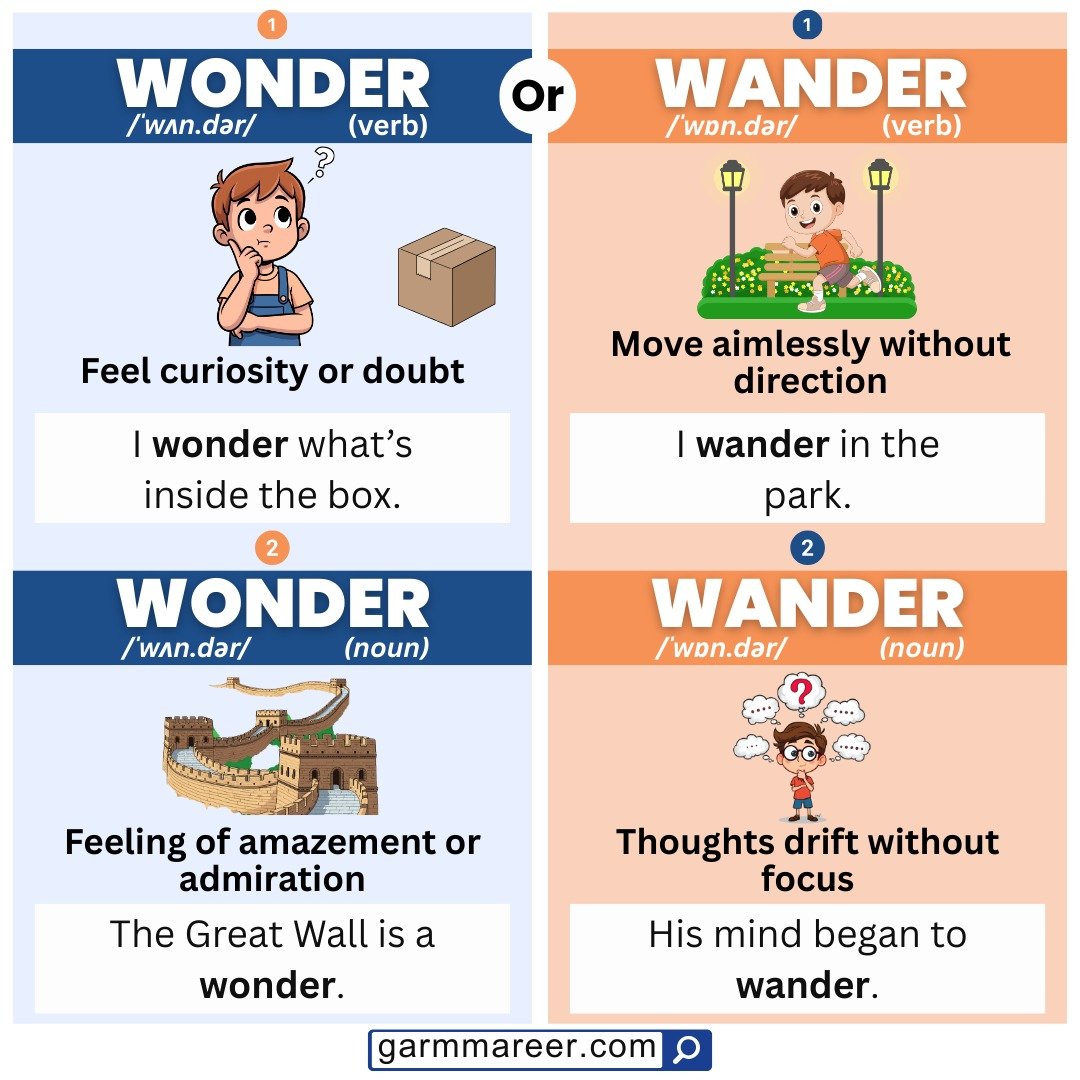
Wonder is about curiosity, amazement, or thinking about something with interest. It’s what you feel when something surprises you or makes you think deeply.
Examples:
- I wonder why the sky changes color at sunset.
- She couldn’t stop wondering how the magician performed that trick.
- Have you ever wondered what life would be like on another planet?
Wander Meaning
Wander is about moving around without a clear direction or plan. It can describe strolling, exploring, or drifting from place to place.
Examples:
- We decided to wander through the old town and see what we could find.
- He likes to wander in the forest and enjoy the quiet of nature.
- Don’t wander too far from the path, or you might get lost.
By remembering that wonder is about curiosity and wander is about moving around, you’ll easily know which word to use in your sentences.
When to Use Wonder?
Use wonder when you are curious, amazed, or thinking about something. It expresses thoughts, feelings, or questions.
- As a verb:
- I wonder what she will say.
- He wondered if he could finish the project on time.
- As a noun:
- The wonder of the Grand Canyon left us speechless.
- She looked at the night sky in wonder.
When to Use Wander?
Use wander when someone moves around without a fixed direction. It’s often used for strolling, exploring, or drifting.
- As a verb:
- We wandered through the streets of the old town.
- Don’t wander too far from the group.
- As a noun:
- His afternoon wander in the park helped him relax.
- They went on a long wander through the countryside.
Common Terms with Wonder or Wander
- Common terms with “wonder”:
- wonder why
- wonder about
- wonder aloud
- wonder child
- wonderment
- Common terms with “wander”:
- wander around
- wander away
- wandering thoughts
- wandering mind
- wander freely
Difference Between Wonder and Wander
| Word | Meaning | Use in Sentence |
|---|---|---|
| Wonder | To feel curious, amazed, or to think about something | I wonder why the sky looks so bright today. |
| Wander | To walk or move around without a clear direction | We wandered around the park for a while. |
Examples of Wonder and Wander
- I wonder what time the class will start.
- We decided to wander around the city after lunch.
- She couldn’t help but wonder how the story would end.
- The kids started to wander away from the playground.
- He looked at the tall mountains in wonder.
- Sometimes I wander through old photos and get nostalgic.
- They wondered if they had made the right choice.
- When you wander without a plan, you often find interesting places.
You May Also Like